


Vienna became the meeting point of Europe’s energy transition from November 10 to 12, and Barbara was there. At Enlit Europe, the leading summit for energy transition and decarbonization, we brought our vision of Edge Computing for the grid to utilities, DSOs, and technology providers. Here’s what we showcased, the conversations that stood out, and what we’re taking home.
Barbara at Enlit Europe
Enlit Europe 2026 brought together more than 15,000 energy professionals, 750 exhibitors, and 600 speakers, making it a key meeting point for utilities, technology providers, grid operators, and industry leaders shaping the future of smart grids, digitalization, and sustainable energy systems.
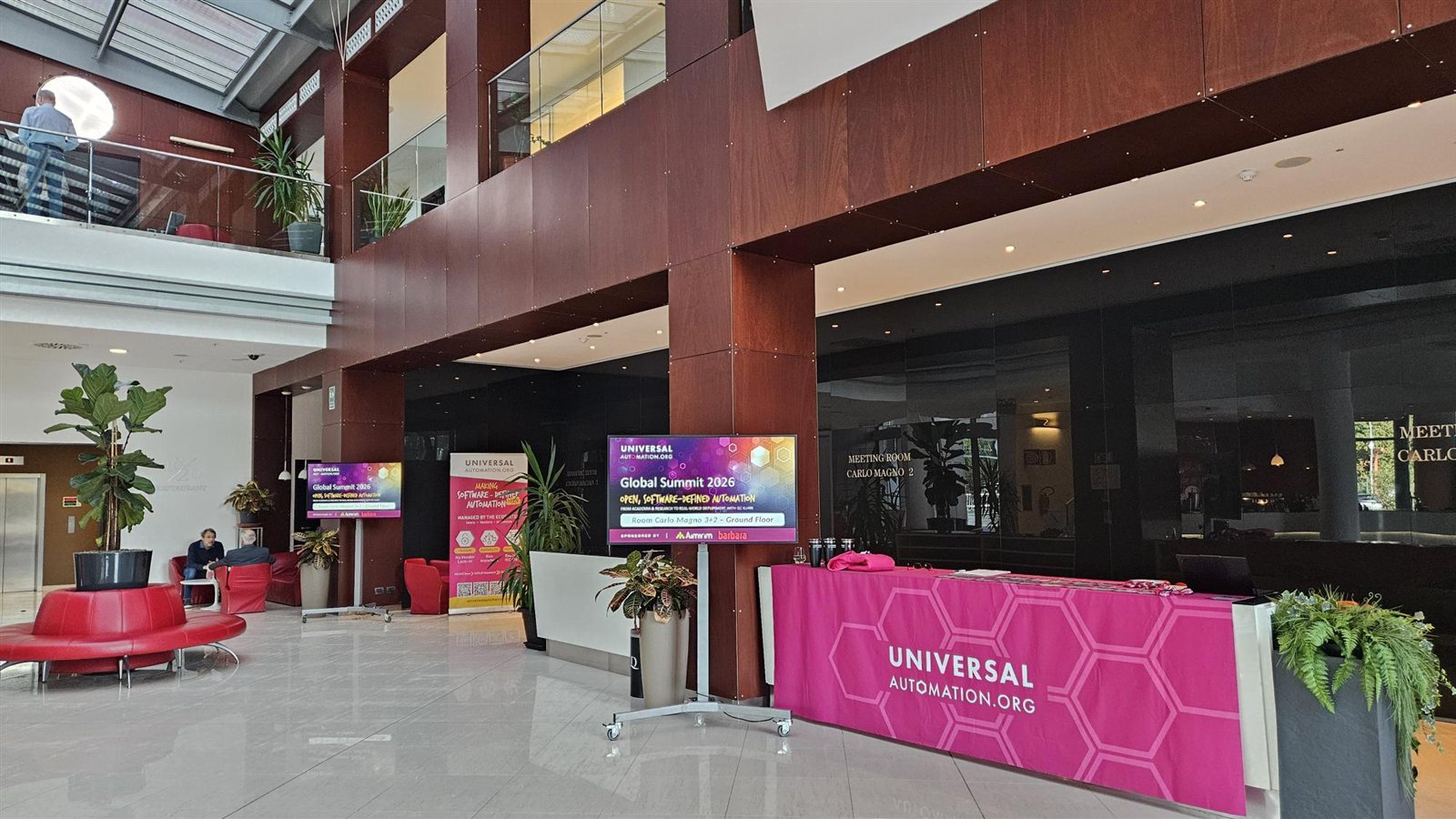
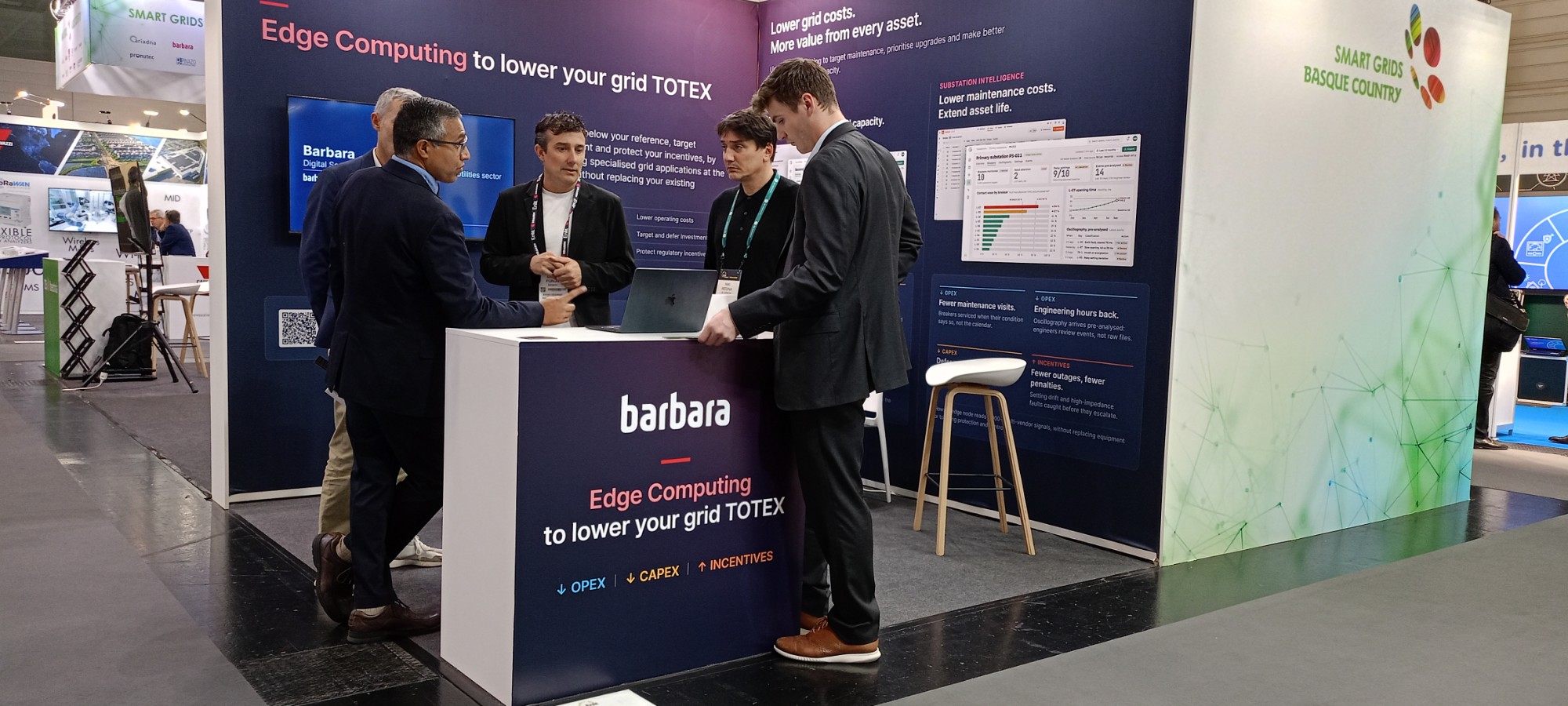
We joined the BASQUEnergy Cluster booth (B.d132, Hall B), represented by our CEO, David Purón, and Senior Solutions Architect, Enrique Ramírez López. Together with our specialist partner Gridfy, we demonstrated how DSOs can run specialized grid applications at the edge. The concept was simple: one node, installed alongside existing equipment, supporting multiple use cases.
What we showed at the booth
Our message was clear: Edge Computing to lower your grid TOTEX. We wanted to demonstrate how companies can operate below their reference cost, target investment, and protect their incentives by deploying specialized grid applications at the edge, without replacing their existing infrastructure.
Through a Digital Secondary Substation Demo for the utilities sector, we explored both sides of the distribution grid: energy balance and non-technical loss detection in low voltage, to reduce losses and make better use of grid capacity, and oscillography triage and condition-based breaker maintenance at the substation level.
The approach presented rested on three guarantees: no new cyber risk, with an IEC 62443-4-2-certified platform; zero disruption, as protection, control, and SCADA remain untouched; and scalability without site visits, with every node managed remotely through the Barbara Platform. Once validated at one point, DSOs can then replicate it all across the grid.
Enlit was also an opportunity to share proven success stories, including Redeia, Aduriz Distribución, and Enerclic, showing how this approach is already being applied in real substations and fleets.
The conversations that stood out
One question shaped many of our conversations in Vienna: how can Edge Computing help DSOs lower their grid TOTEX?
Substation virtualization was one of the most frequently discussed topics at Enlit, closely aligned with the work we’re already doing with our customers.
But perhaps the clearest takeaway was where innovation is happening.
“At Enlit it was obvious that the innovation is at the Grid Edge. For some companies the edge is the secondary substation, for others it is the customer’s home, but it is definitely at the edge.”
— David Purón, CEO at Barbara
Nearly half of the exhibitors were talking about edge solutions, and three types of conversations stood out:
- Manufacturers of legacy devices were looking to incorporate Edge Computing to offer new services to DSOs.
- DSOs expressed interest in our substation monitoring, loss detection, and fault detection solutions, co-developed with Gridfy.
- System integrators wanted to explore our platform as a foundation for building digital solutions for utilities.

Presenting at the E4S Alliance
The E4S Alliance (Edge for Smart Secondary Substation System) brings together a community working on an open, interoperable, and secure standards-based architecture for smart secondary substations. Its goal is to accelerate the development of flexible, manageable, and interoperable platforms that help grids respond to growing demand, electrification, and renewable energy integration.
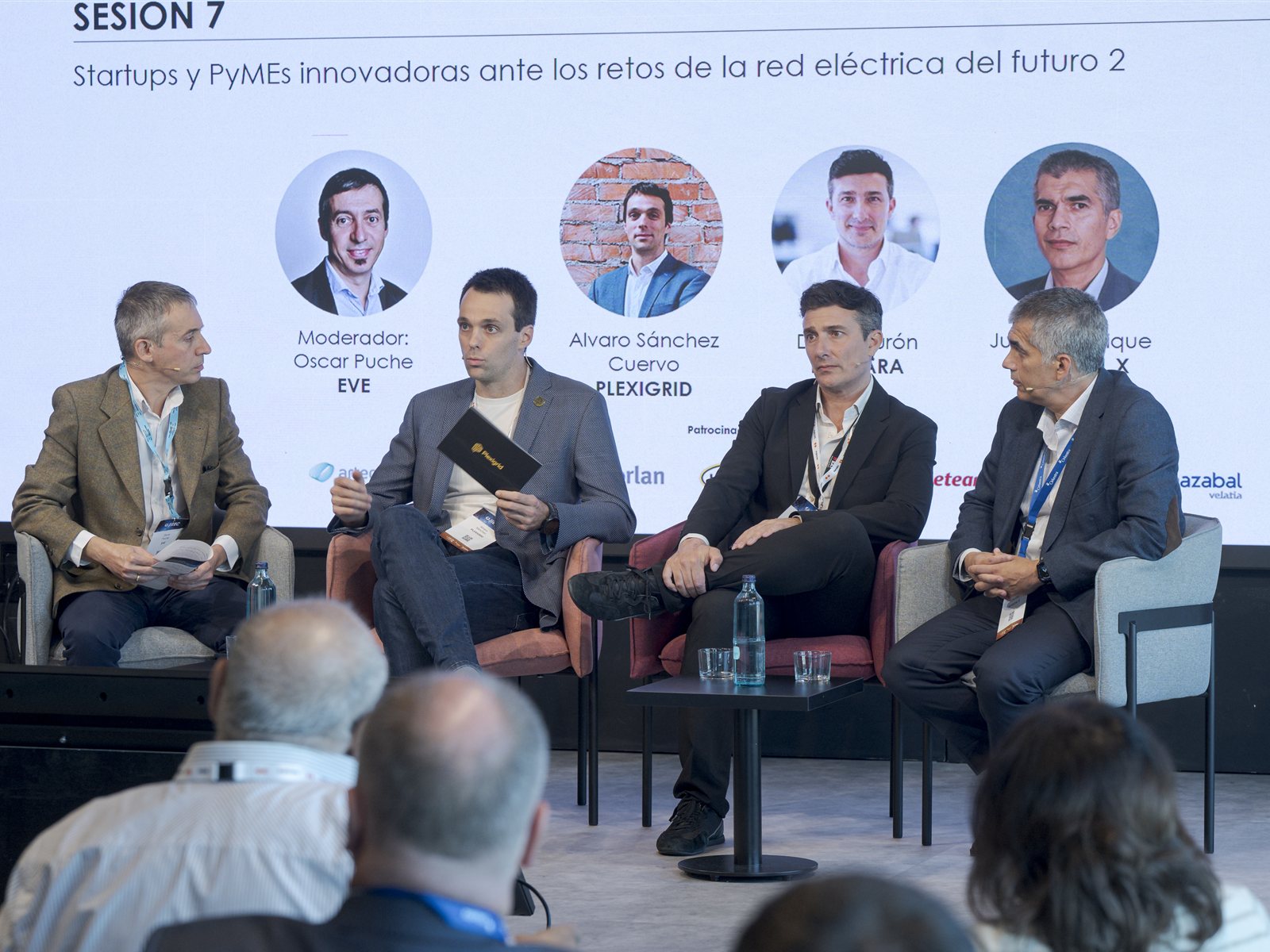
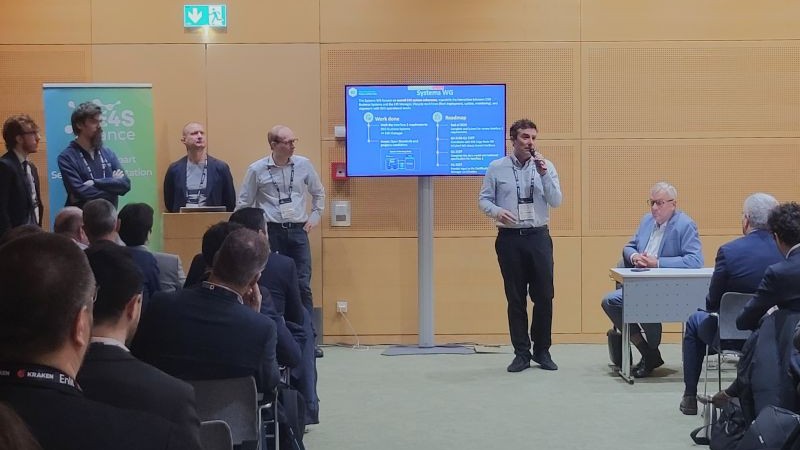
During Enlit, the Alliance held a plenary session in which David Purón presented the work done so far by its Systems Working Group and the roadmap ahead.
The group focused on overall system coherence: how DSO business systems interact with the E4S Manager, and how lifecycle workflows, from deployment and monitoring to updates, come together within a consistent, scalable architecture.
Looking ahead
Our work with Gridfy is a clear example of what Edge Computing makes possible: specialized grid applications deployed alongside existing equipment, without disrupting the infrastructure that already works.
A special thank you to Pablo López, Smart Grids Manager at Gridfy, and Alberto Sánchez, CEO at Gridfy, for their work on the demos and technical support; to the BASQUEnergy Cluster for its logistical support and for fostering networking and ecosystem connections throughout the event; to the E4S Alliance for the opportunity to present at its plenary session; and to everyone who stopped by our booth to exchange ideas and perspectives.
We leave Vienna with new conversations, fresh ideas for the Grid Edge, and plenty to build on.
Let’s keep building the future of the grid, together.