5/11/2026
-
8
min
A plant can have thousands of sensors and still not understand how its process is operating. We explain what a real digital twin is, using the grinding circuit as an example, and why in mining the models have to run at the edge.
A plant can have thousands of sensors and still not understand how its process is operating. We explain what a real digital twin is, using the grinding circuit as an example, and why in mining the models have to run at the edge.


A concentrator plant can have thousands of sensors, PLCs, historians and SCADA systems, and still not truly understand how its industrial process is operating. The data exists, but it is spread across systems that do not talk to each other, and each shift interprets the operation in its own way.
The global study on mining and metals risks by the consulting firm Ernst & Young ranked operational complexity first for 2026 for the first time, ahead of geopolitics and capital. Ore grades are falling, equipment is aging, feed variability is growing and expert knowledge is retiring. The problem is not a lack of data. It is that the data does not know what it is talking about.
In this context, digital twins are increasingly talked about. But the term is used for very different things, and that confusion costs money.
A digital twin is not a 3D model of a machine, nor a dashboard connected to variables. Those tools are useful, but they describe. They do not understand.
A practical way to look at it is on three levels:
For a real digital twin to exist, four conditions must be met:
If any of the four is missing, what you have is a nice monitoring tool. It may be a very good one, but it is not a twin.
The grinding circuit is one of the best places to understand what a digital twin brings. It is where most of a concentrator plant's energy is consumed, and where it is defined how much ore reaches flotation and under what conditions.
It is also a system, not a collection of equipment. What enters in the feed affects the circulating load, the circulating load affects classification in the hydrocyclones, and classification affects recovery downstream. No single mill sensor tells the full story of a change in ore hardness. It is seen by the whole process, hours later.
Today, most operations look at this circuit in silos. The mill manufacturer delivers its equipment's telemetry: power consumption, mechanical condition, vibration. Maintenance has its predictive model. Metallurgy has its particle size reports. Each area solves its own part well, and the complete system keeps operating far from its best version.
A simple example: when the circuit goes into overload, three things happen at the same time. The load on the equipment increases, power consumption rises and product quality falls. These are not three problems for three areas. They are three symptoms of the same operating state. A digital twin on the grinding circuit sees them for what they are: signals from a single organism.
The first time this concept emerged, we were not looking for it. We were analyzing a year of data from a grinding circuit, minute by minute, hundreds of variables, and at some point it stopped looking like noise. The process had operated in different modes, but not random ones. Patterns that repeated, each with different consequences for throughput, energy and quality.
We called that pattern the Operating Signature. It is a reading of the process's multivariable behavior, with pressure, current, flow, density and vibration analyzed together, to identify what operating state the system is in at any given moment. It works like an electrocardiogram: it does not measure one variable, it measures the health of the whole.
In a grinding circuit, states like these usually appear:
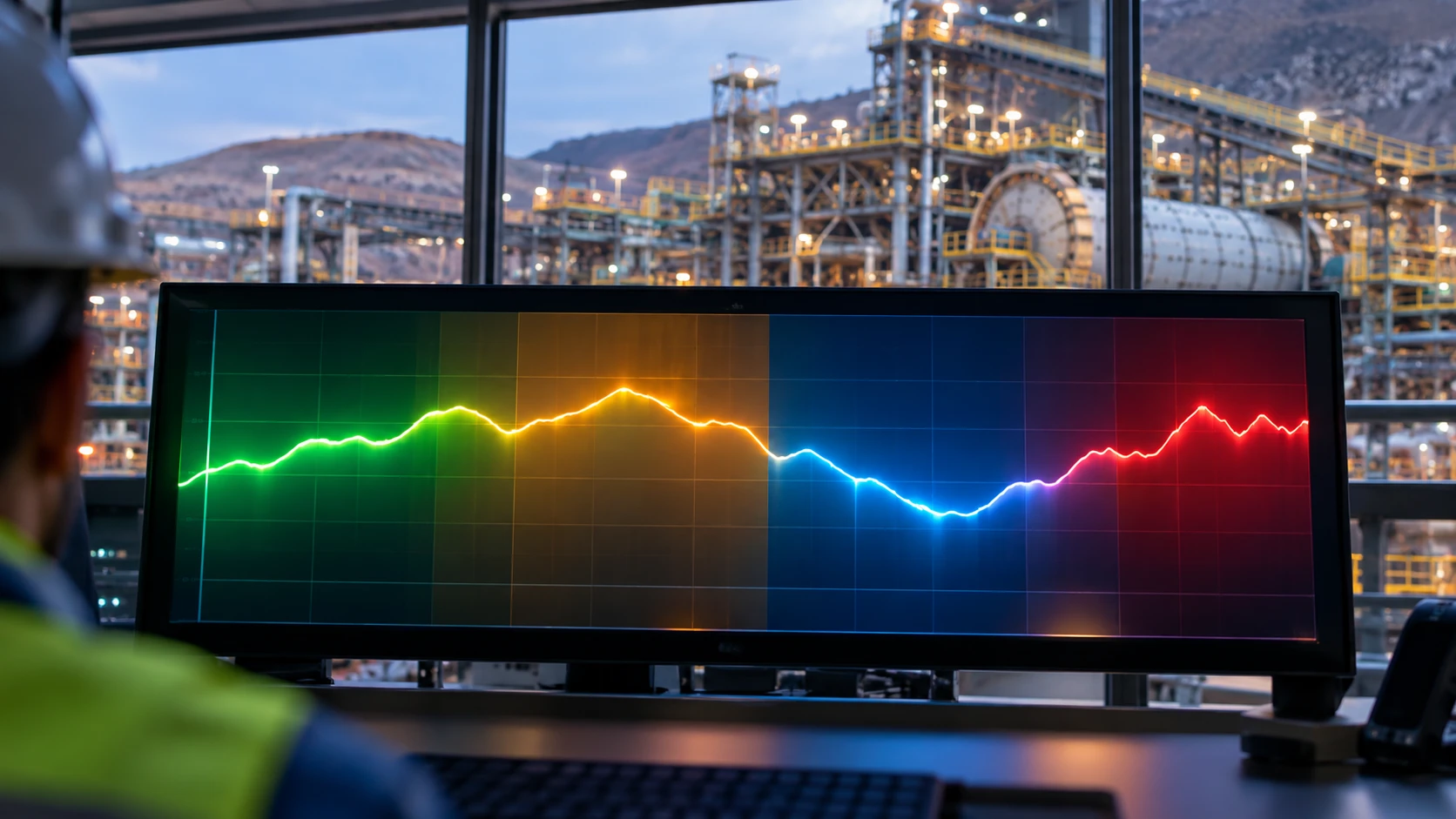
What we found when exploring data from several mining circuits in Peru is that the optimal state does not exceed 40% of the time. In one case it was only 27%. The rest of the time the process was in states that the plant team knew from experience, but that nobody had mapped or quantified.
This changes the conversation in three ways:
The Operating Signature does not replace the operator's experience. It complements it. No operator can remember three years of data from 200 variables at once. The data can.
A mining operation in the Andes can be hours away from the nearest control center, with intermittent connectivity and several intermediaries before the data reaches where someone makes a decision. If the model runs in the cloud or in a remote center, every decision depends on the connection working and the data arriving on time.
In a process where conditions change in seconds, a minute of latency is not a technical detail. It is a decision made late.
The answer is to bring intelligence to where the data is: the industrial edge. Devices installed in the operation itself, managed by the mining company, that process the data and run the models locally. This provides three things:
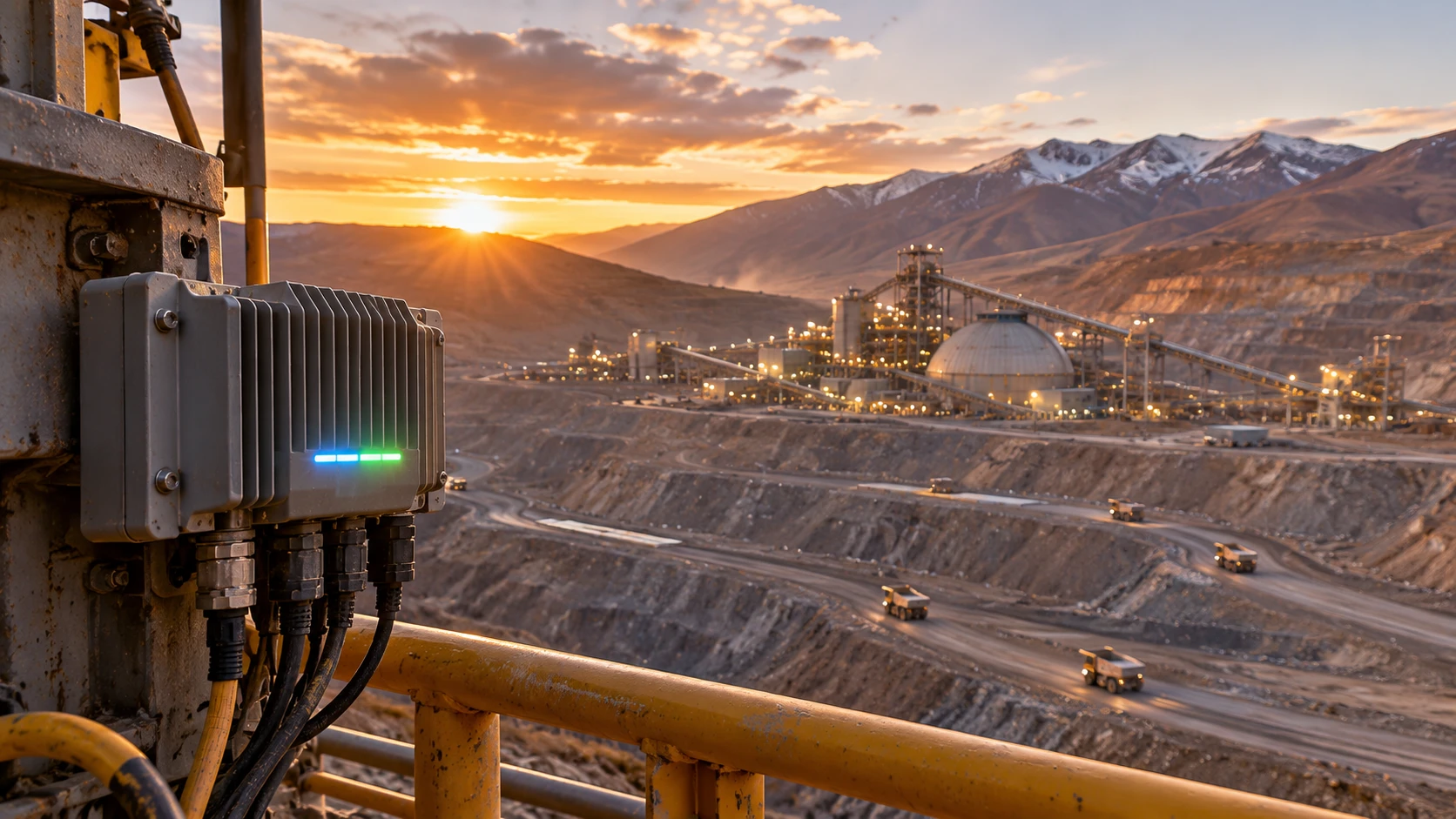
It should not be confused with telecom edge (MEC), which lives in the network operator's infrastructure and is used to move data fast, for example in teleoperation. They are complementary: 5G moves the data, the industrial edge processes it where it matters.
But the edge is only useful if the data it processes is reliable. A value with no identity, no equipment, no unit and no context is of no use to a model. That is why the architecture is built from the bottom up: first industrial data governance, so that every data point is generated with context and quality from the sensor; then the edge, to process it in the operation; and only then the behavioral models, the Operating Signature and the decisions. Artificial intelligence does not solve a data problem. It amplifies it.
A well-built digital twin gives the operation things it does not have today: knowing what state the process is in right now and comparing it with its best moment, anticipating drift before throughput drops, seeing maintenance, energy and quality as signals of the same system, and retaining the knowledge of the most experienced operators when they retire.
The risks are real too, and most of them are not technological:
The first step is not technological. It is choosing a process where the problem is clear and historical data already exists, and asking that data which states the process has operated in, how long it spent in each and what it cost. That answer, in most plants, already exists. It just has to be extracted.
With that clear, architecture, platform and investment decisions are made on evidence and not on promises.
Camilo Posada is the founder and CEO of Summan. With more than three decades in the technology sector, Camilo drives the transition of traditional industries toward models based on data, telemetry and artificial intelligence. Today Camilo leads the development of digital twins with Operating Signature for mining and industry.
Summan is a Colombian company, based in Medellín, that optimizes industrial operations with the power of data. It develops digital twins, advanced analytics and artificial intelligence for manufacturing, mining and energy. Its Journey to Digital Twin methodology starts from the data that each operation already has.
A plant can have thousands of sensors and still not understand how its process is operating. We explain what a real digital twin is, using the grinding circuit as an example, and why in mining the models have to run at the edge.


