


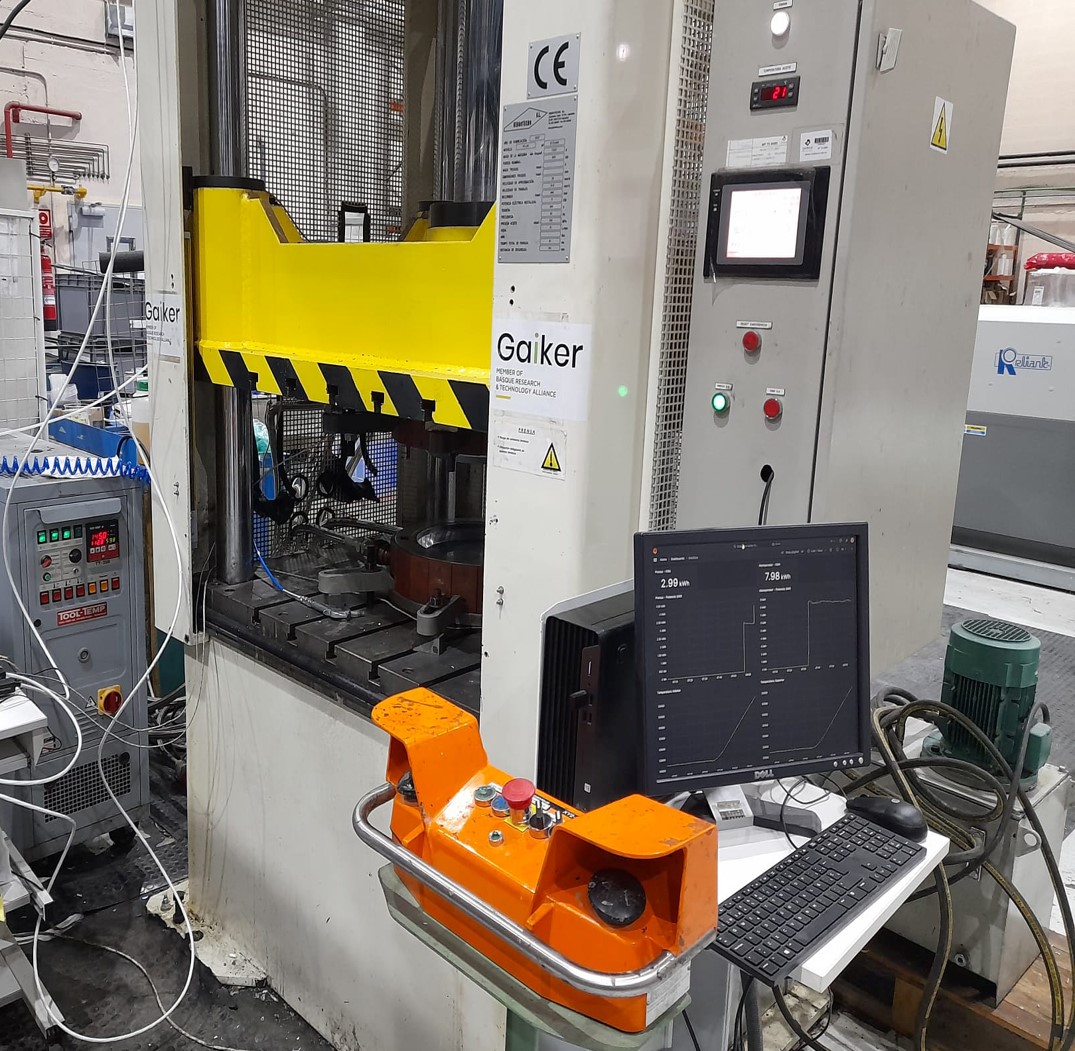
In the Open SMC 4.0 project, the technology center GAIKER worked with Barbara to monitor an SMC molding cell in real time. The data showed that optimizing the energy use of the molding process does not compromise the quality of the composite.
GAIKER, a technology center specialized in materials, plastics and composites, verified and validated that an SMC molding cell could save almost 10% of energy per molding cycle (9.67%) with no loss of composite quality, by reducing the compaction pressure while keeping cycle times unchanged. It did so by monitoring the whole cell in real time, supported by an ecosystem of partners: Pretec, Moldes URA, ITCL, BestPlant, the Basque Energy Cluster and the Spanish Plastics Center.
The Starting Point: A Molding Environment Without Data
The goal of Open SMC 4.0 was a fully digitalized, sensorized SMC molding cell, to control the process in terms of both energy and the quality of the resulting composite.
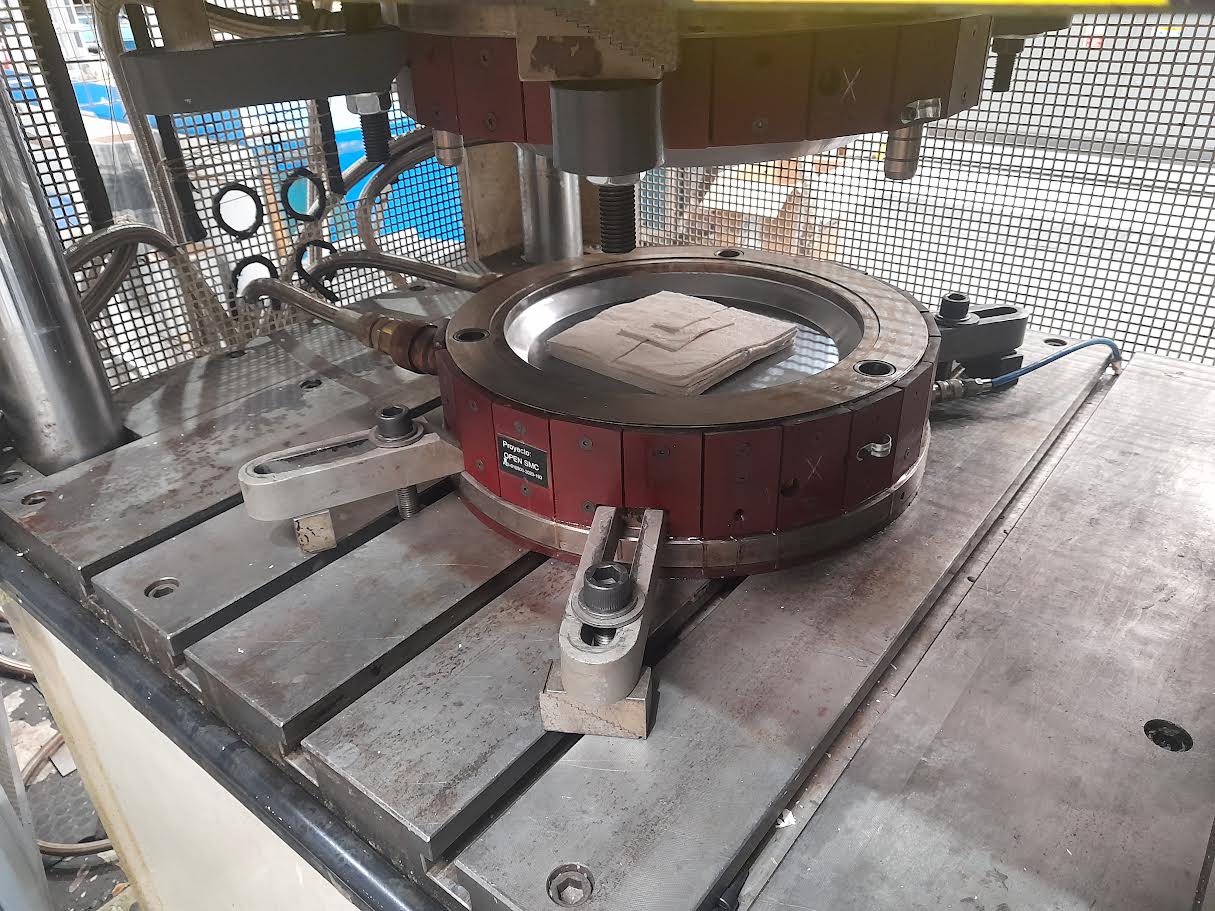
The starting point was a heated molding press and tooling more than 30 years old, with no sensors and no thermal insulation on the mold, where the operator's own experience and judgment determined how the molding cycle was optimized and validated for each type of SMC being processed.
Santiago Neira, Senior Researcher in composite materials at GAIKER and project lead, presented the results at the online innovation project showcase organized by the Spanish Plastics Center (CEP). He described the starting point bluntly:
“An obsolete mold that lacked any kind of sensors, and even thermal insulation, and the molding criteria applied were the maximum molding pressure the press allowed and no optimization of the molding cycle time, simply making sure the resulting part was optimal and of the highest quality.”
Santiago Neira, Senior Researcher in composite materials at GAIKER
Barbara's Role: From the Sensor to the Screen
GAIKER rebuilt the molding environment, adding pressure and temperature sensors, thermal insulation, and monitoring of energy consumption and molding variables. For its part, Barbara made it possible, through an MQTT ingestion application, to collect in real time the readings of the molding cycle and the energy consumption of the cell's equipment, and to store them in databases, so that every reading traveled from the monitored, sensorized cell to the screen in a graphical and intuitive way:
- That application ingested the data from the MQTT broker into the databases (InfluxDB, MongoDB and MySQL).
- Modbus and an MQTT broker carried the readings captured by ADAM data acquisition devices, which converted the analog signals from the sensors into digital ones.
- The data chain ran on an edge computing device on the plant floor, next to the press, and fed real-time Grafana dashboards with the mold's pressure and temperature, and the energy and power of the press and of the temperature controller.

Once the data was flowing, the technology center ITCL applied algorithms to relate the mold and machine parameters to energy consumption.
The Results
GAIKER molded a commercial SMC under many combinations of temperature and pressure, and compared each energy reading with the mechanical quality of that same part. These were the results:
- 9.67% less energy per molding cycle: from 0.62 to 0.56 kWh.
- Press pressure from 70 to 50 tons, keeping the same 160 °C setpoint and the same 180-second cycle. The press power dropped from 7.68 to 6.46 kW.
- 21.1% less environmental impact of the molding stage: from 0.180 to 0.142 kg of CO₂ equivalent.
- Lowering the temperature did not help: a cycle at 150 °C needed 209 seconds instead of 180 and consumed more: 0.70 kWh.
- A second validation with partner Pretec: the low-temperature SMC formulated by GAIKER was molded at 122 °C instead of 143 °C and in 70 seconds instead of 115, with the same 120 tons.
The data also uncovered an uncomfortable truth. In Santiago's words:
“We were oversizing and wasting extra energy to get the same result.”
Santiago Neira, Senior Researcher in composite materials at GAIKER
The parameters the team trusted produced a good composite, but not an efficient one. And the savings were never achieved at the expense of quality. As he put it himself:
“Energy-saving criteria cannot be applied to a transformation cycle if it is going to affect the final quality of the composite.”
Santiago Neira, Senior Researcher in composite materials at GAIKER
An Optimal Band, and What Remained Manual
With the data, GAIKER defined an optimal pressure molding profile for the selected SMC, shown to the operator on screen as an optimal molding band, green in this case. As long as the cycle stayed within that band, the process was efficient from the standpoint of both energy and the quality of the resulting composite. When it drifted outside, the operator adjusted the cycle by changing, among other variables, the programmed molding pressure. Having the machine correct itself automatically, always staying within the green band, would be the next step.
What This Means for Plastics Companies in Spain
Open SMC 4.0 showed that a processor does not need a new press to achieve a better process. It needed to see the one it already had. For a plastics or composites company in Spain with presses and molds that are many years old, little process data and no IT team, the case suggested a clear path:
- Measure first, with sensors on the tooling and energy meters on the press and the temperature controller.
- Bring the data to a single screen without building an IT department around it.
- Test the parameters that have always worked, because they may be costing more than necessary.
- Look at energy and quality at the same time, so that saving never costs a good part.
That is where Barbara fits in: connecting machines, sensors and data in a manageable way for teams that are experts in their process, not in IT.
About GAIKER
GAIKER is a private, non-profit technology center dedicated to research and to technological and innovation services for companies. Since 1985 it has contributed to the technological development and competitiveness of companies in Biotechnology, Sustainable Composites, Functional and Sustainable Polymers, and Recycling and Circular Economy. Its team of more than 120 professionals carries out its own and collaborative R&D projects, provides advanced technology services and performs laboratory analyses and certification tests.
The Open SMC 4.0 project (AEI-010500-2023-193) was funded by the European Union through NextGenerationEU, with the support of the Spanish Ministry of Industry and Tourism and the AEI Clústeres program.
About Barbara
Barbara is the Edge AI platform for industrial companies. Operations teams use Barbara Panel to deploy, monitor and update applications and AI models on distributed edge nodes, next to the assets and the real-time data. Barbara Marketplace offers a catalog of industrial applications ready to deploy from Barbara Panel, and Barbara Panel holds a certificate of conformity to the IEC 62443-4-2 standard.
Barbara serves energy and manufacturing companies in more than 23 countries, with more than 150 applications available.